The Pitch That Almost Didn't Happen
Should Pawsome Provisions bet on private label manufacturing? The proof, not just the pitch.
In 2018–2019, Pawsome Provisions acquired a string of new facilities — growth that looked great on paper. A few years later, some of those plants were barely running, and Apollo Heeler, GM of West Coast Plant Operations, was catching heat for it.
Violet Shepherd, Senior RevOps Analyst, went looking for the "why" — and found an opportunity instead of an excuse: turn the idle capacity into private label capacity. Rex Pointer, VP of Sales and a 15-year company veteran, wasn't convinced — private label sounded like diluting the brand he'd helped build. So the case got built to survive his scrutiny, not just make headlines.
Show Me the Proof
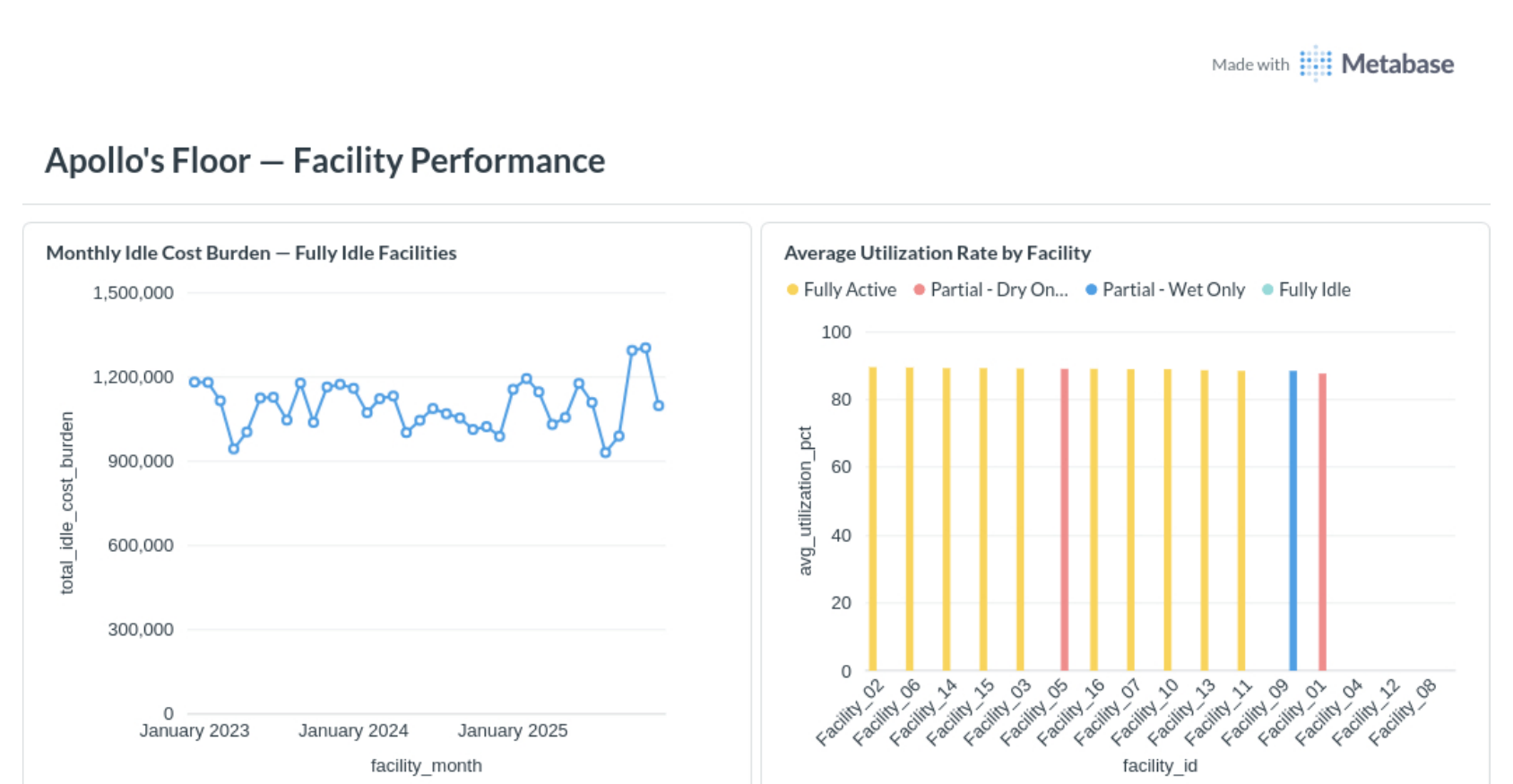
Idle cost burden held between roughly $900K and $1.3M a month for nearly three years. Three facilities — 04, 12, and 08 — sat at essentially zero utilization the whole time. Not a bad month. A standing problem.
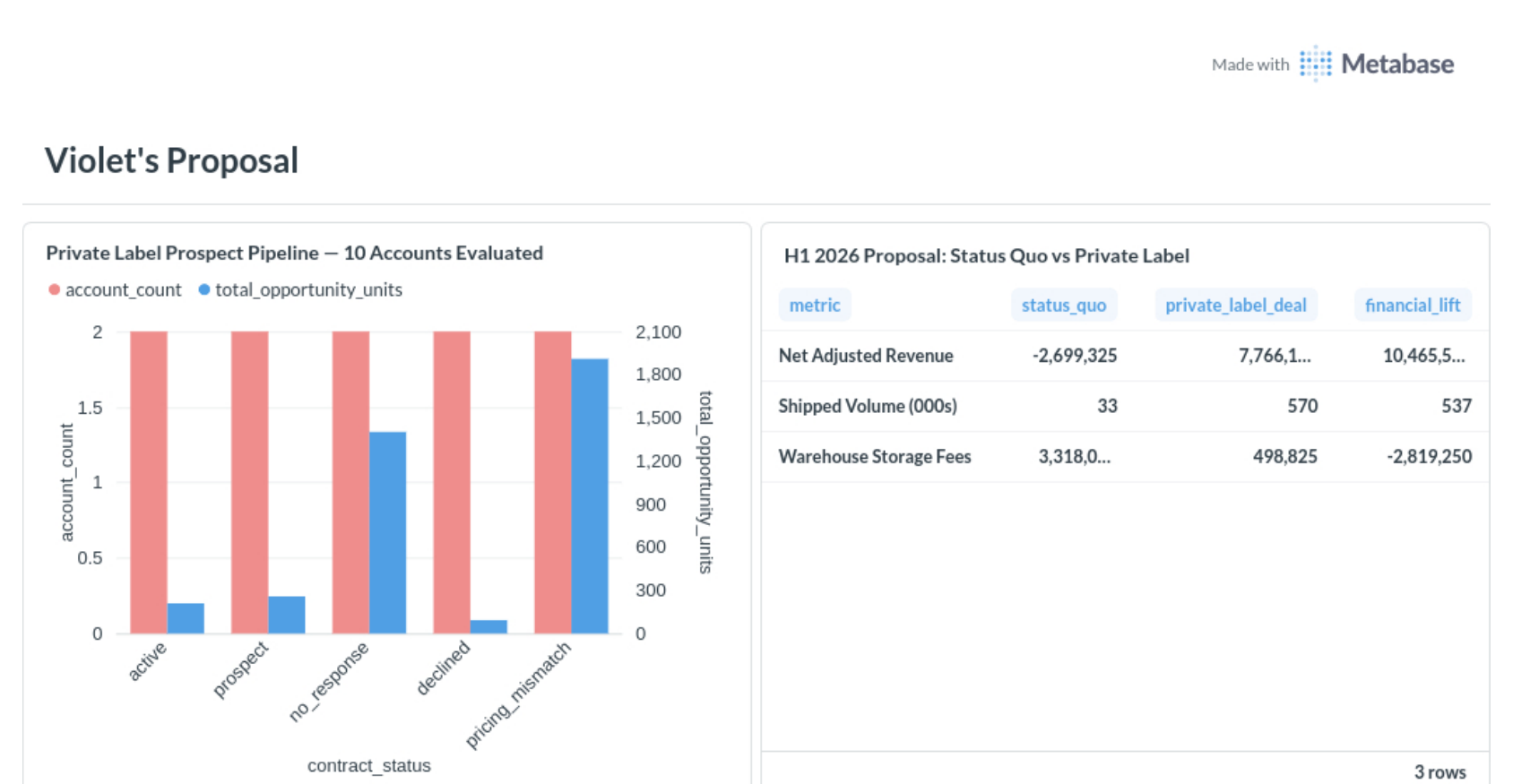
The verdict: Status Quo projected a net loss for H1 2026. Private Label projected a swing of roughly $10M in the other direction, with shipped volume up nearly 17x. The pipeline chart shows real, unclaimed opportunity still sitting with Sales to close.
Violet built the case expecting Rex to push back — and he did. His read was simple: private label doesn't sit next to the brand, it competes with it. Fifteen years of protecting Pawsome's shelf position doesn't just disappear because a dashboard says the math works.
What changed his mind wasn't a reframe. It was the numbers holding up. He went looking for where the case was wrong, the way he does with anything that touches the brand — and it didn't move. No hidden cannibalization of existing volume, no dilution buried a few rows down. Just idle capacity, a market for it, and a P&L that improved without touching what he'd spent 15 years building.
The proposal made it to committee. The board approved it.
A Note on AI Assistance
Claude (Anthropic) was used for architecture guidance, dbt project structure, code review, and pair programming throughout this project. All design decisions, domain framing, debugging, and implementation are my own work.
AI was used as a collaborative assistant, not a replacement for engineering judgment.